
Several previous blogs described our community resisting, due to the vague plans and potential harmful impacts to our health and economy, a proposed hyperscale data center. We felt happy to achieve a one-year moratorium on all applications submitted to our town.
At the last meeting of our group called ProtectWakeCountyCoalition, I learned about an organization called FAIME.org for experts to register and offer environmental support for non-profit groups. Once I became accepted, they connected me with a group called Protect the Porkies to help them evaluate potential impacts from copper-silver mining next to the Porcupine Mountains State Park and Lake Superior. The specific task is to review the NPDES permit and prepare comments to the State of Michigan’s Department of Environment, Great Lakes and Energy known as EGLE.
I spent the past two weeks and about 25 hours so far on the task to review documents and prepare comments that I plan to submit to EGLE. I’m posting these comments here and if you feel inclined to take action, please follow the Protect the Porkies website.
The Plan
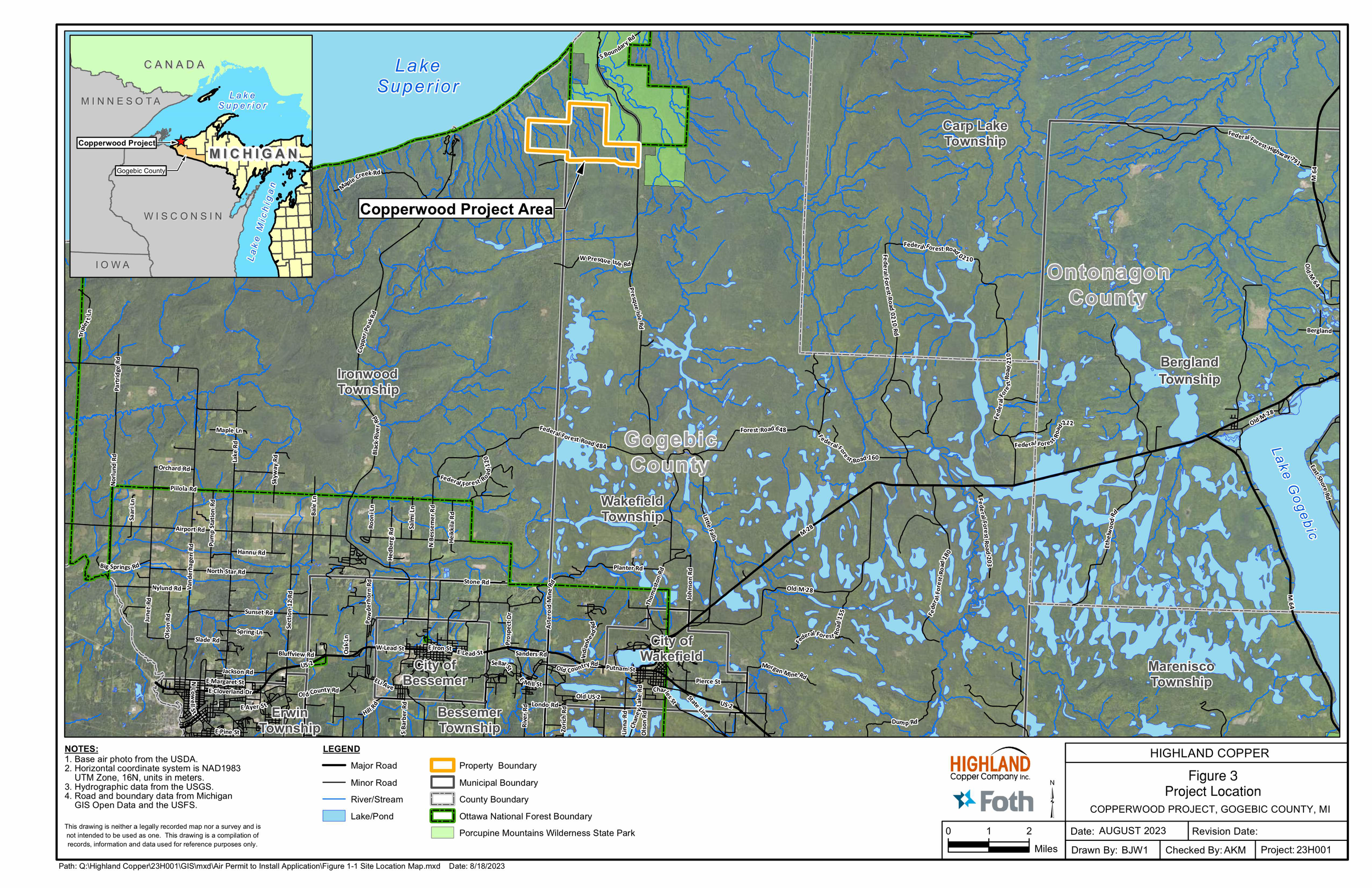
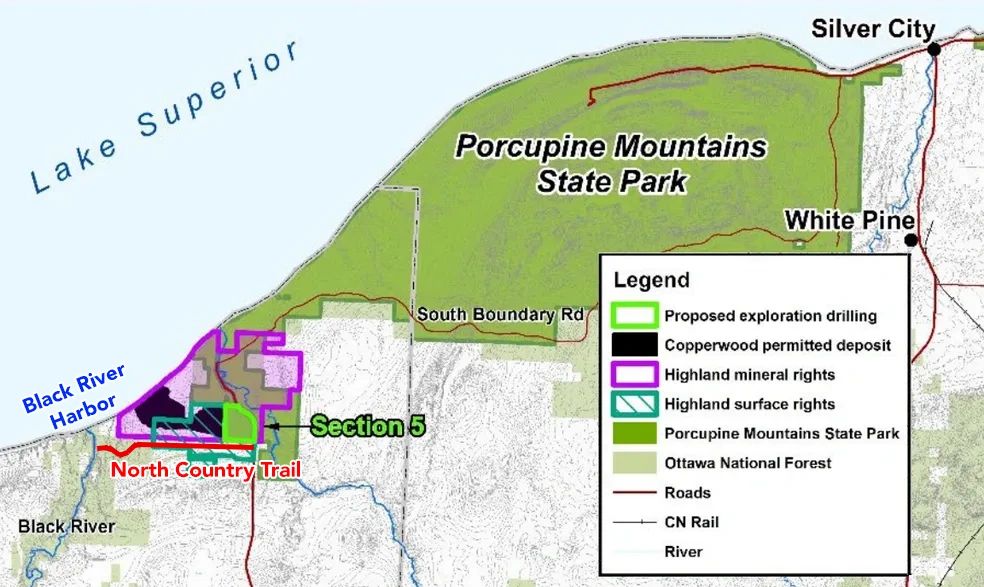
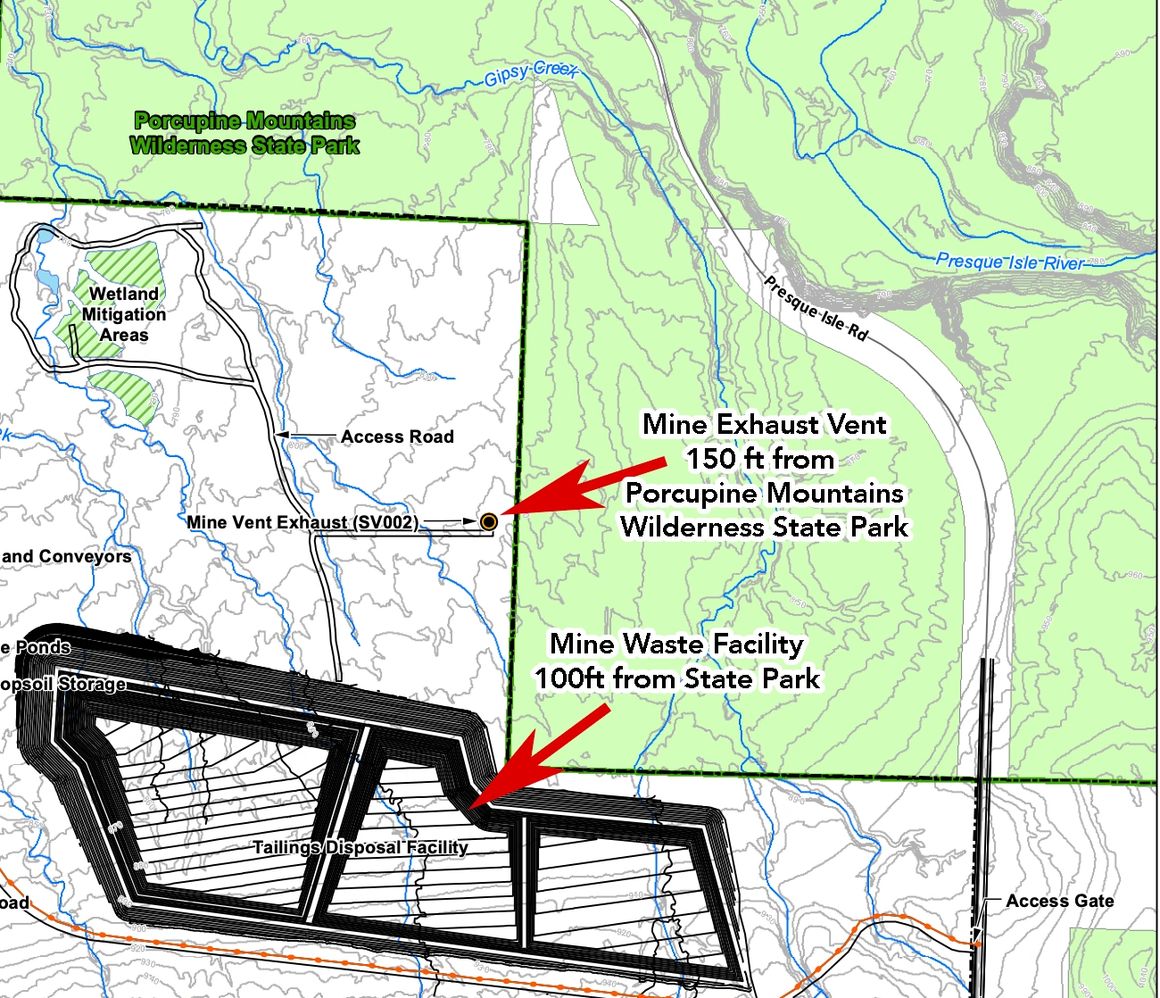
A Canadian mining company operating in the Upper Peninsula of Michigan proposes to construct underground mine shafts sloping towards Lake Superior reaching within 100 feet. The source of water to be used for mining is uncertain and may require a pipeline to extract water from Lake Superior. Mined rock removed by slurry sends ore grade metals including copper and silver that are concentrated by several water treatment methods. Waste rock tailings would be impounded on land next to Porcupine Mountains State Park and fluids are discharged to a creek containing critical habitat for endangered species.
The company is requesting MI EGLE via a NPDES permit application to allow discharge of up to 0.504 million gallons per day (184 million gallons per year) of contaminated wastewater, toxic metals, storm water, and demineralized reverse osmosis fluids which must be ‘within limits’ to pollute the West Branch of Namebinag Creek that flows back towards Lake Superior. Expanded electrical grid transmission and onsite power requirements will be significant to operate mining operations including reverse osmosis systems and likely would necessitate additional capacity from baseload power consisting of burning coal, natural gas turbines, or nuclear including small modular reactors that will also require significant water resources and other impacts including air pollution and additional waste disposal.
A total complete plan for the entire operation is needed to properly assess the mining permit requirements including for the NPDES permit. With the availability of a complete plan, options for zero liquid discharge could be implemented that would prevent contaminant discharge making the NPDES permit unnecessary.
Consequences of Accepting the Proposed Copperwood NPDES permit
Natural processes will be altered by mining that could also impact operations. The 50-foot cliff bank at Lake Superior is eroding towards the mine site at the rate of 1.6 ft/year so within about 62 years the lake shore could reach the proximity of the proposed underground mine if built as proposed within 100 feet of the banks of Lake Superior.
The process of mining copper sulfide introduces oxygen and water which can produce sulfuric acid creating acid mine drainage. Sulfide can also oxidize into sulfate which releases toxic metals including arsenic, chromium, lead, molybdenum, selenium and strontium. Groundwater becomes contaminated that is not collected by mining operations which impacts the environment.
The 2018 Highland Copper Feasibility study states on Page 8-1:
“Mineralization: Chalcocite and other Cu2S-CuS minerals + bornite are diagnostic; typical minerals hematite–chalcocite–bornite–chalcopyrite–pyrite; may be zoned with chalcocite-bornite central, chalcopyrite-pyrite medial, galena-sphalerite peripheral; finely disseminated; copper sulfides replace framboidal or colloform pyrite; and, carbon-rich materials in favorable host rocks but usually consumed by redox reactions during copper mineralization processes.”
The discharge of heavy metals into the creek possesses numerous detrimental impacts. The presence of significant iron sulfide (e.g. pyrite) minerals when exposed to oxygen and water can create sulfuric acid and result in acid mine drainage. Iron also can act like a sponge for metal sorption. Dissolved metals forming soluble complexes can pose a long-term threat through sorption on clay minerals and iron and manganese oxyhydroxides.
The NPDES permit requests Michigan’s permission to dump an average of 2,100 pounds per day for ten months allowing for short term spikes up to 3,200 pounds per day. For two months in the spring, releasing an average of 2,300 pounds per month with spikes up to 3,500 pounds per day is being requested.
Annual totals of total dissolved solids (TDS) proposed to be released into the creek:
TDS (2,100 lbs/day * 30 days * 10 months) + (2,300 * 30 days * 2 months) =
768,000 pounds/year based on maximum flow rate allowed!
Up to about 768,000 pounds/year of dissolved solids could be released into the creek. Much of these dissolved solids may not stay dissolved and become solids through processes of mineral precipitation, ion exchange and sorption. The annual weight of solids is equivalent to the weight of 153 Ford F-150 5,000 pound trucks.
Imagine the contamination of the watershed while mining occurs over 10+ years. Furthermore, with the creation of a tailings dam impoundment, leaching and discharge of metals will occur long after the mining ceases.
The NPDES permits states that reverse osmosis (RO) treated water “must be managed such that effluent hardness will not produce toxic metal effects in the effluent discharged to West Branch Namebinag Creek. The permeate from RI is demineralized and can have corrosive properties due to the absence of ions. The permittee must manage the permeate effluent discharge to minimize toxicity in conjunction with whole effluent toxicity testing.”
Hardness is not currently on the parameter list which is a test for dissolved calcium and magnesium which is important to quantify for preventing leaching of metals and buffering acid mine drainage.
However, the NPDES permit required toxicity tests on flathead minnows and fleas does not consider impacts to macroinvertebrates and other aquatic organisms. As creek levels rise and fall with weather events, seasons and variable mining discharge quantities, water stored in banks and evaporated water containing toxic heavy metals and stream sediments are washed onto land and can become airborne and dispersed into the streams and forest. Bioaccumulation occurs throughout the food chain impacting wildlife.
The list of parameters proposed to be monitored in the NPDES permit is incomplete and more information is required to monitor geochemical impacts to the environment and should also include aluminum, alkalinity, chloride, hardness, iron, radium, nitrate, nitrite, sodium, sulfide, sulfate, and uranium.
The permit should not allow for reduction in frequency from weekly to monthly monitoring after 12 months for 20 elements.
In July, 2009, on behalf of the mining company’s consultant AECOM authorized Fishbeck, Thompson, Carr & Huber, Inc. (FTC&H) to perform baseline aquatic studies including fish, macroinvertebrates and physical habitat. The report is: Baseline Fisheries, Macroinvertebrate and Physical Habitat Studies for the Copperwood Project 2010.
From Executive Summary:
“All streams within the project area are regulated pursuant to Part 301, Inland Lake and Streams, of the Natural Resources and Environmental Protection Act (NREPA), 1994 P.A. 451, as amended. However, from the perspective of providing quality stream habitats for fish and macroinvertebrates, all streams suffer from varying degrees of environmental degradation. Despite the lack of fish in the upper reaches, and the presence of degraded water in the beaver ponds, the highest quality streams are Unnamed and Namebinag Creeks. The presence of redside dace in their lower reaches makes the protection of their watersheds and instream habitats critical.”
On Page 21 the report states: “Populations of reside dace within the Copperwood site should be protected from human-related impacts. The Namebinag and Unnamed Creek watersheds should be delineated and project activities within these watersheds, especially those that could alter hydrology, water temperature or turbidity, should be avoided or minimized to the extent possible. Road crossings or other earth-disturbing activities within these watersheds should incorporate appropriate best management practices to eliminate impacts to these streams.”
Why is the mining company ignoring their consultant’s directions?
The Highland Copper 2018 Feasibility Study, Page 6-4 states, “An environmental geochemical examination was completed on eight reject samples of mineralization, hanging wall, and footwall rocks from three historical drill holes. Interpretation of the geochemical test results by Geochimica, Inc. indicates that Copperwood rocks are unlikely to be acid generating and, consequently, may be characterized as non-reactive under Michigan mining laws. In addition, the rock pile created by the extraction of copper-bearing rock from the underground exploration activity in the 1950s was trenched and sampled after being subjected to approximately 50 years of wet, oxidizing conditions. Based on visual observations, the rocks appear to be non-reactive.”
I reviewed the following article and find the above statements to be exaggerated and potentially misleading:
Theodore J. Bornhorst and Mark J. Logsdon, 2016. Predicting Future Water-Quality Impacts from Mining: a 52-yearold Field Analog for Humidity-Cell Testing, Copperwood Deposit, Michigan. Economic Geology, vol. 111, pp. 527-542.
The article is very useful for comparing predications of water quality from lab column tests with a prior mining rock pile that already had been significantly altered. I do not believe this brief study in 2016 is representative of all “Copperwood rocks” by using simplified modeling and does not conclude there is no potential for acid mine drainage. In fact, they recommended longer term studies would be needed but were not continued. This study is not comparable to impacts that could occur from the NPDES discharge on the creek and surrounding environment. Therefore, the Copperwood Resources Inc. feasibility study discussion of acid mine drainage is insufficient and must be reevaluated.
Opportunity to Prevent Pollution by Denying the NPDES application
Given the skyrocketing commodity prices of copper and silver, we urge MI EGLE to require Copperwood mining to be a zero discharge facility by fully using the water treatment plant to concentrate and remove all liquid contaminants including RO process water. Instead of accepting the current proposal, we advocate rejecting the NPDES permit and require Zero Liquid Discharge (ZLD). Here is a 2026 article by Minetek.com comparing ZLD with conventional methods.
Don’t let the state park and banks of Lake Superior become a toxic waste dumpsite!
Granting a National Pollutant Discharge Elimination System “NPDES” permit to the mining company defeats the intended purpose of eliminating pollution discharge and enables pollution into an unpolluted, relatively pristine environment. The permit would allow significant pollution to occur endangering critical habitats with potential negative effects on an endangered species of fish native to the area - the Redside Dace.
A tailings management facility can be located much further away from the mining site and not located next to the state park.
As shown below, Protect the Porkies issued a Press Release with the following statements of mine:
To better understand potential harms of the current wastewater discharge proposal, Protect the Porkies contracted Bill Dam, a consultant who has worked with the Department of Energy and the U.S. Geological Survey. “The total weight of the dissolved solids entering the creek would amount to up to 768,000 pounds per year,” Dam said. “This is the equivalent of 153 Ford F-150 trucks crashing and dissolving into the creek, every year, directly upstream from an endangered fish and Lake Superior.”
Instead of discharging into the stream, both Dam and Grotewohl are calling upon the company to utilize a Zero Liquid Discharge (ZLD) system, in which all wastewater is mechanically evaporated, and the remaining solids are taken off-site.
“Given the skyrocketing commodity prices of copper and silver, the mining company can afford to implement feasible alternatives that will be significantly less harmful to the area and its lifeforms,” Dam said.
Shown below are the pdf and doc files with links:
Protect the Porkies challenges EGLE, Highland Copper on dubious claims
Controversy mounts surrounding a proposal to discharge mine
wastewater into the stream of a state-endangered fish
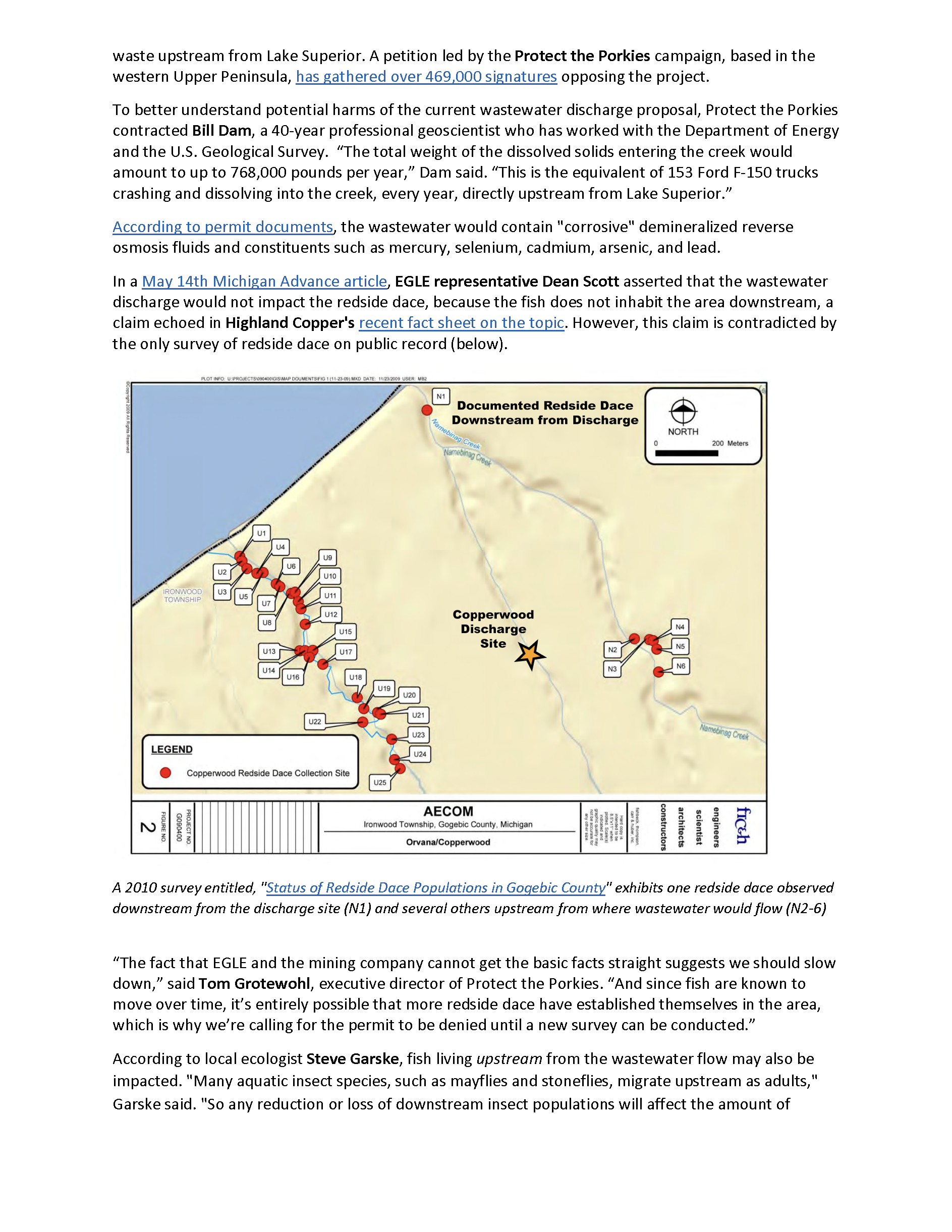
Photo from Michigan Natural Features Inventory
Wakefield, Michigan, June 30, 2026 - The Copperwood Mine proposal adjacent to Lake Superior and the Porcupine Mountains is seeking a permit from EGLE to discharge up to half a million gallons of wastewater per day into the habitat of a state endangered fish, the redside dace. Due to significant public interest, EGLE will be holding a virtual hearing for the National Pollutant Discharge Elimination System (NPDES) permit application on July 8, 2026, in which members of the public, including citizens of multiple Tribal Nations, will be making spoken comments.
According to Dr. Nichole Keway Biber, Water Justice Manager for Clean Water Action and tribal citizen of LTBB Odawa, Copperwood's NPDES permit should be denied. "This wastewater permit, submitted by the profit-motivated Copperwood mine on the interest of a foreign corporate gamble, must be deemed impermissible if EGLE is going to meet their responsibility to oversee the health of the environment and Great Lakes, as is implicit to their name," Biber said.
The proposed mine has attracted attention in recent years due to its immediate proximity to Porcupine Mountains Wilderness State Park and the North Country Trail, as well as plans to store mine tailings waste upstream from Lake Superior. A petition led by the Protect the Porkies campaign, based in the western Upper Peninsula, has gathered over 469,000 signatures opposing the project.
To better understand potential harms of the current wastewater discharge proposal, Protect the Porkies contracted Bill Dam, a 40-year professional geoscientist who has worked with the Department of Energy and the U.S. Geological Survey. “The total weight of the dissolved solids entering the creek would amount to up to 768,000 pounds per year,” Dam said. “This is the equivalent of 153 Ford F-150 trucks crashing and dissolving into the creek, every year, directly upstream from Lake Superior.”
According to permit documents, the wastewater would contain "corrosive" demineralized reverse osmosis fluids and constituents such as mercury, selenium, cadmium, arsenic, and lead.
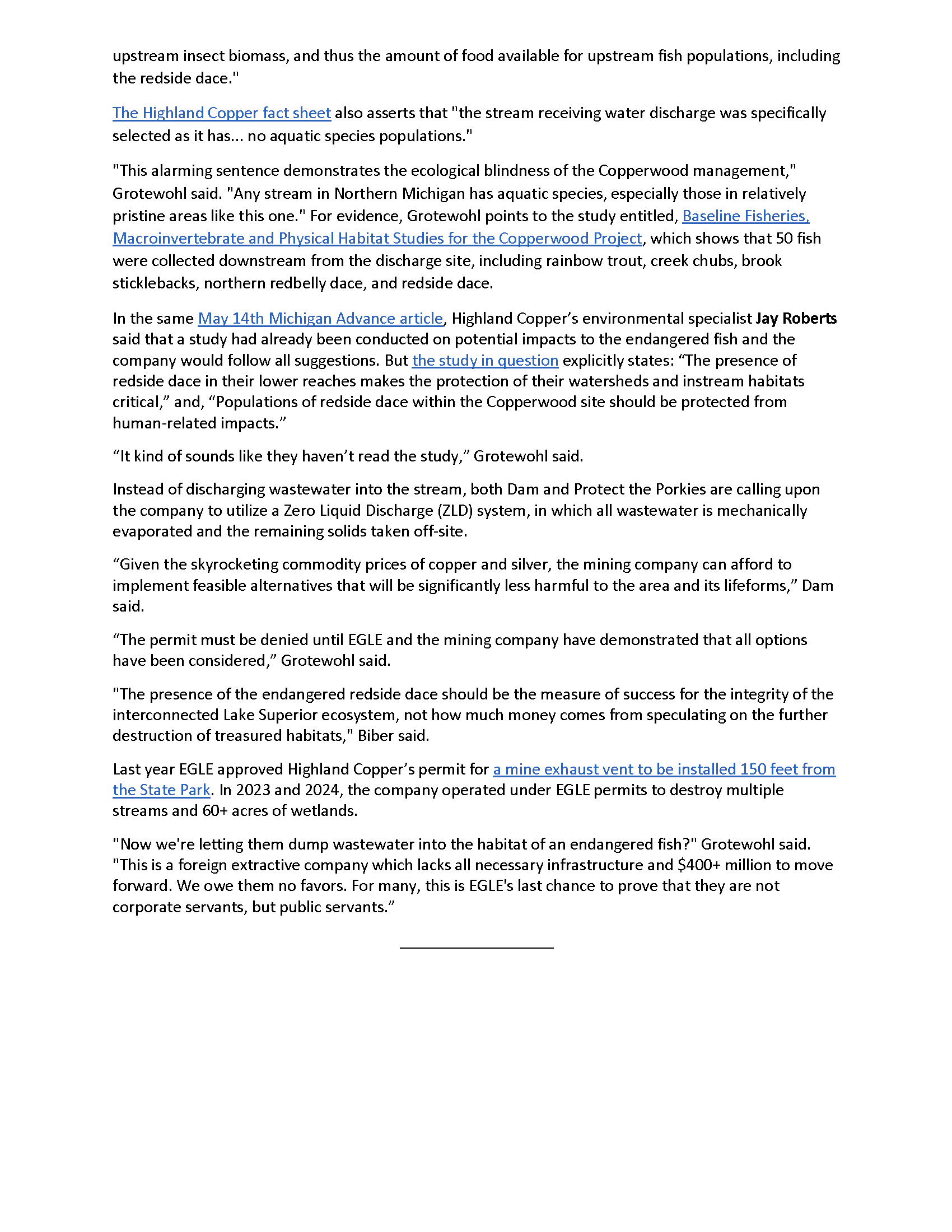
In a May 14th Michigan Advance article, EGLE representative Dean Scott asserted that the wastewater discharge would not impact the redside dace, because the fish does not inhabit the area downstream, a claim echoed in Highland Copper's recent fact sheet on the topic. However, this claim is contradicted by the only survey of redside dace on public record (below).
A 2010 survey entitled, "Status of Redside Dace Populations in Gogebic County" exhibits one redside dace observed downstream from the discharge site (N1) and several others upstream from where wastewater would flow (N2-6).
“The fact that EGLE and the mining company cannot get the basic facts straight suggests we should slow down,” said Tom Grotewohl, executive director of Protect the Porkies. “And since fish are known to move over time, it’s entirely possible that more redside dace have established themselves in the area, which is why we’re calling for the permit to be denied until a new survey can be conducted.”
According to local ecologist Steve Garske, fish living upstream from the wastewater flow may also be impacted. "Many aquatic insect species, such as mayflies and stoneflies, migrate upstream as adults," Garske said. "So any reduction or loss of downstream insect populations will affect the amount of upstream insect biomass, and thus the amount of food available for upstream fish populations, including the redside dace."
The Highland Copper fact sheet also asserts that "the stream receiving water discharge was specifically selected as it has... no aquatic species populations."
"This alarming sentence demonstrates the ecological blindness of the Copperwood management," Grotewohl said. "Any stream in Northern Michigan has aquatic species, especially those in relatively pristine areas like this one." For evidence, Grotewohl points to the study entitled, Baseline Fisheries, Macroinvertebrate and Physical Habitat Studies for the Copperwood Project, which shows that 50 fish were collected downstream from the discharge site, including rainbow trout, creek chubs, brook sticklebacks, northern redbelly dace, and redside dace.
In the same May 14th Michigan Advance article, Highland Copper’s environmental specialist Jay Roberts said that a study had already been conducted on potential impacts to the endangered fish and the company would follow all suggestions. But the study in question explicitly states: “The presence of redside dace in their lower reaches makes the protection of their watersheds and instream habitats critical,” and, “Populations of redside dace within the Copperwood site should be protected from human-related impacts.”
“It kind of sounds like they haven’t read the study,” Grotewohl said.
Instead of discharging wastewater into the stream, both Dam and Protect the Porkies are calling upon the company to utilize a Zero Liquid Discharge (ZLD) system, in which all wastewater is mechanically evaporated and the remaining solids taken off-site.
“Given the skyrocketing commodity prices of copper and silver, the mining company can afford to implement feasible alternatives that will be significantly less harmful to the area and its lifeforms,” Dam said.
“The permit must be denied until EGLE and the mining company have demonstrated that all options have been considered,” Grotewohl said.
"The presence of the endangered redside dace should be the measure of success for the integrity of the interconnected Lake Superior ecosystem, not how much money comes from speculating on the further destruction of treasured habitats," Biber said.
Last year EGLE approved Highland Copper’s permit for a mine exhaust vent to be installed 150 feet from the State Park. In 2023 and 2024, the company operated under EGLE permits to destroy multiple streams and 60+ acres of wetlands.
"Now we're letting them dump wastewater into the habitat of an endangered fish?" Grotewohl said. "This is a foreign extractive company which lacks all necessary infrastructure and $400+ million to move forward. We owe them no favors. For many, this is EGLE's last chance to prove that they are not corporate servants, but public servants.”
Update July 13, 2026
On July 8th, I provided the following testimony to the State of Michigan’s Department of Environment, Great Lakes and Energy public meeting to gather comments on the NPDES permit application by Copperwood Resources. The three hour meeting recording is provided here: https://www.youtube.com/watch?v=tS6de75NqpI. We heard that 43 people registered to provide a comment. I asked a question on the cobalt levels at min 38:00 and my comments began at 1:35:00 lasting for 3 minutes as shown here:
“My name is Bill Dam and I’m an Independent Environmental Scientist with 25 years federal and 15 years consulting experience. I’ve reviewed the draft National Pollutant Discharge Elimination System (NPDES) application and advocate for NOT granting permission to the Canadian company based on the following seven reasons:
the Lake Superior basin as a Tier 3 Outstanding Water must be protected from loading of pollutants according to the antidegradation rule (Rule 98 of Part 4, Water Quality Standards on page 56). Mining is proposed within 100 feet of the lake while the cliff bank is eroding towards the mine site and discharge locations.
Discharge of wastewater will result in the spread of contamination that will flow into small pools and beaver dams offering NO dilution of pollution.
Critical habitats support many species like the endangered redside dace which again violates the antidegradation rule if not protected.
Discharging up to 1/2 million gallons per day (184 million gallons per year) containing total dissolved solids of over 2000 pounds per day creates a toxic junk yard like wrecking 1530 Ford F-150 trucks over a 10-year lifespan of the mine.
Iron minerals like pyrite (iron sulfide) are abundant and oxidation can produce acid mine drainage but iron and many other elements are not controlled or regulated in the NPDES draft permit.
Arsenic is proposed to be discharged up to 10 micrograms per liter while the MCL goal is zero. A 10 year mining operation could result in 146 pounds of arsenic accumulating which is a known insecticide. Colbalt is requested to be 10 times greater in concentration than arsenic. Ironically, Canada and some U.S. states including New York set a chronic limit for aquatic life 25 times lower than proposed in the permit application. Rule 57 (pages 9 to 44) needs revision to conform with more stringent standards!
The discharger failed to propose available technology in process and treatment like mechanical evaporation used by copper miners in other states like Arizona. Several companies including Evaporation Works and Minetek provide mechanical evaporation systems to copper mining operations worldwide that will make NPDES toxic waste discharge unnecessary.
Therefore, please reject this discharge permit to protect Michigan’s environment as depicted by the State motto: “If you seek a pleasant peninsula, look about you.””